



Hey folks, Alex here 👋
We said it on the show and I will say it again here: this could be the most consequential week in AI’s history. Nvidia announced that Jensen Huang has resigned as CEO and left the board. This is following a wild week with reported affairs with a potential Chinese Spy, and two other women. We talk about this at length.
In the same week, Anthropic shipped Claude Fable 5.2 and started its IPO roadshow, Google made Gemini 4 Carbon generally available and launched a model that only makes decisions, and CoreWeave reported a quarter people are saying saved the AI trade.
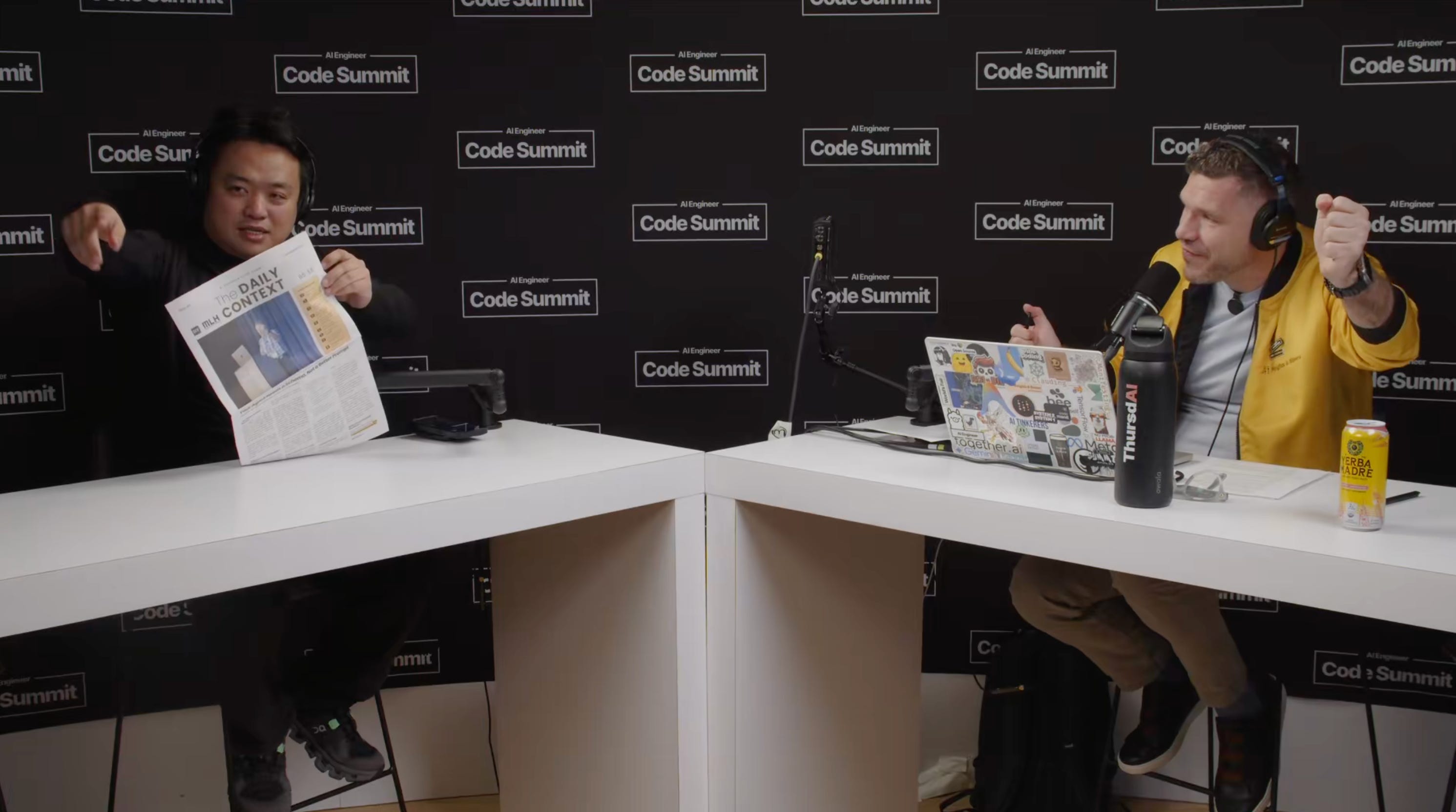
We broadcast this one live from the AI Engineer Code Summit in San Francisco, and because of that we had five guests walk straight over from the conference. Kent C. Dodds explained software factories, Michelle Chen told us why Cloudflare is now a neolab, Ivan Leo from Google DeepMind broke Gemini 4 Hydrogen live on the show, Zach Lloyd came off the main stage to walk us through Warp’s factory stack, and Swyx closed the show.
The quick TL;DR:
Jensen Huang resigns as Nvidia CEO, CFO Colette Kress is interim CEO
Claude Fable 5.2 is #1 on Artificial Analysis and 20% cheaper, and Anthropic starts its IPO roadshow (ticker ANT)
Gemini 4 Carbon is GA, Gemini 4 Hydrogen launched live on the show, plus the Gemini Decisions API
Nous Arete-27B trains the propaganda out of a Qwen model without losing capability
Interviews: Kent C. Dodds, Michelle Chen, Ivan Leo, Zach Lloyd and Swyx
No more Jensen: Huang resigns from Nvidia after affairs and scandals
Jensen Huang resigns, Colette Kress is interim CEO (Announcement, X)
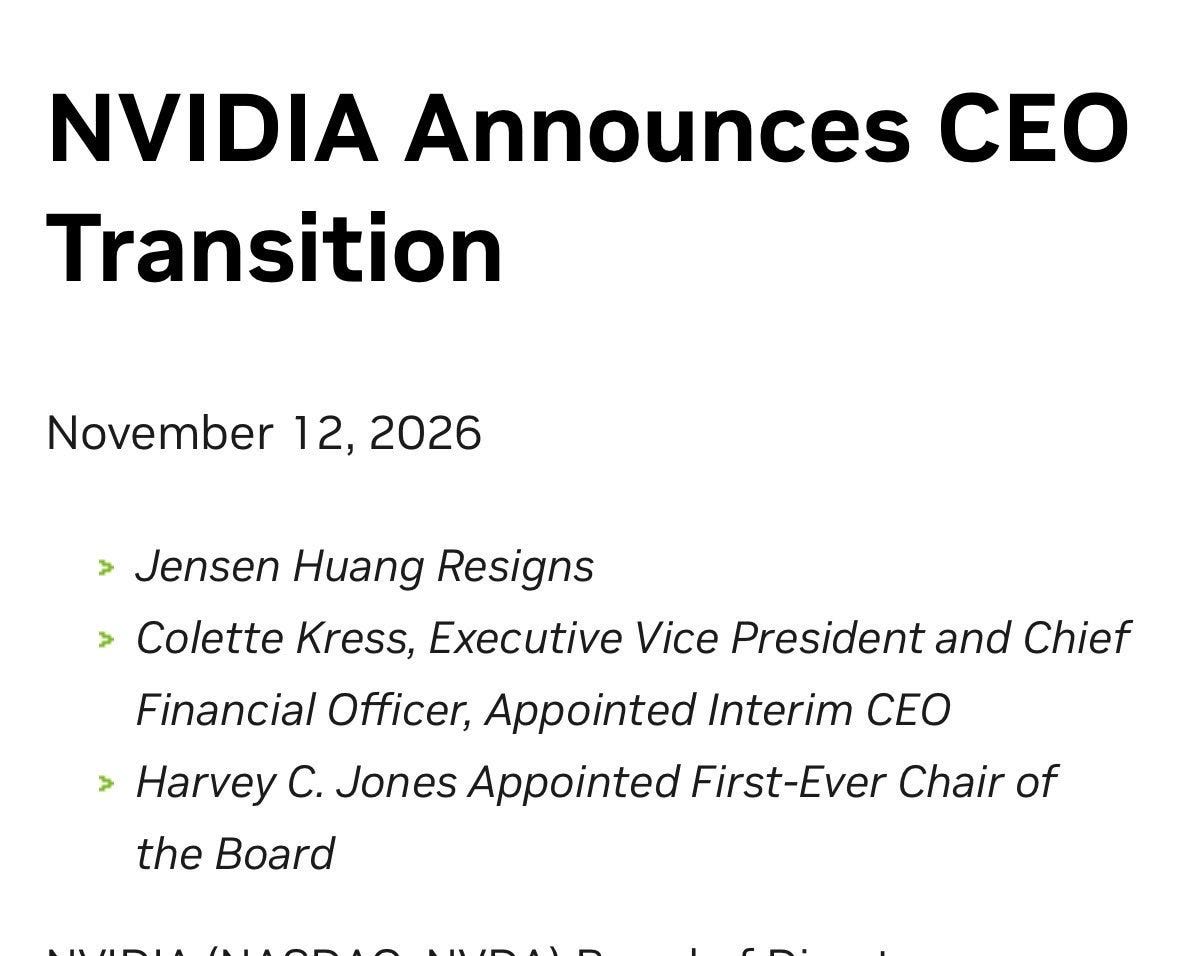
This morning Nvidia announced that Jensen Huang has resigned as President, CEO and member of the board, effective immediately. He founded the company 33 years ago and turned it into the most important company in AI. CFO Colette Kress is now the interim CEO and keeps the CFO job, Harvey Jones (former CEO of Synopsys) becomes the first-ever board chair, and the board is searching for a permanent CEO among internal and external candidates.
How we got here took about four days. On Sunday, Jensen emailed Nvidia staff and admitted to an affair, and the board opened an independent investigation into whether he was the target of a foreign intelligence effort. The reports center on Alice Huang (no relation), and The Information reported that her network helped move about $7.5B of Nvidia chips to China. Then the New York Times reported a second affair, the Wall Street Journal reported the board was preparing to oust him, and this morning it was official. Note that the release says “resigned” and gives no reason.
I said it on the show and I will repeat it: I don’t care about the affairs, that is between him and his family. What matters to us is that this is a person at the center of the AI ecosystem. He is the chief allocator of compute, and he has been one of the loudest voices for open source AI, both in public and in the President’s ear.
That open source angle is what worried the panel most. Yam said it straight: he fears for open source. Ray pulled up Jensen’s first post on X from July, a letter Nvidia signed on why open models matter, saying the world needs both frontier closed models and frontier open models. Wolfram pointed out that Jensen was pro open source as a businessman, since open models run on his GPUs, but that he was still one of the most influential people pushing for it, and that losing him over allegations, with nothing proven, is a blow to the open source community.
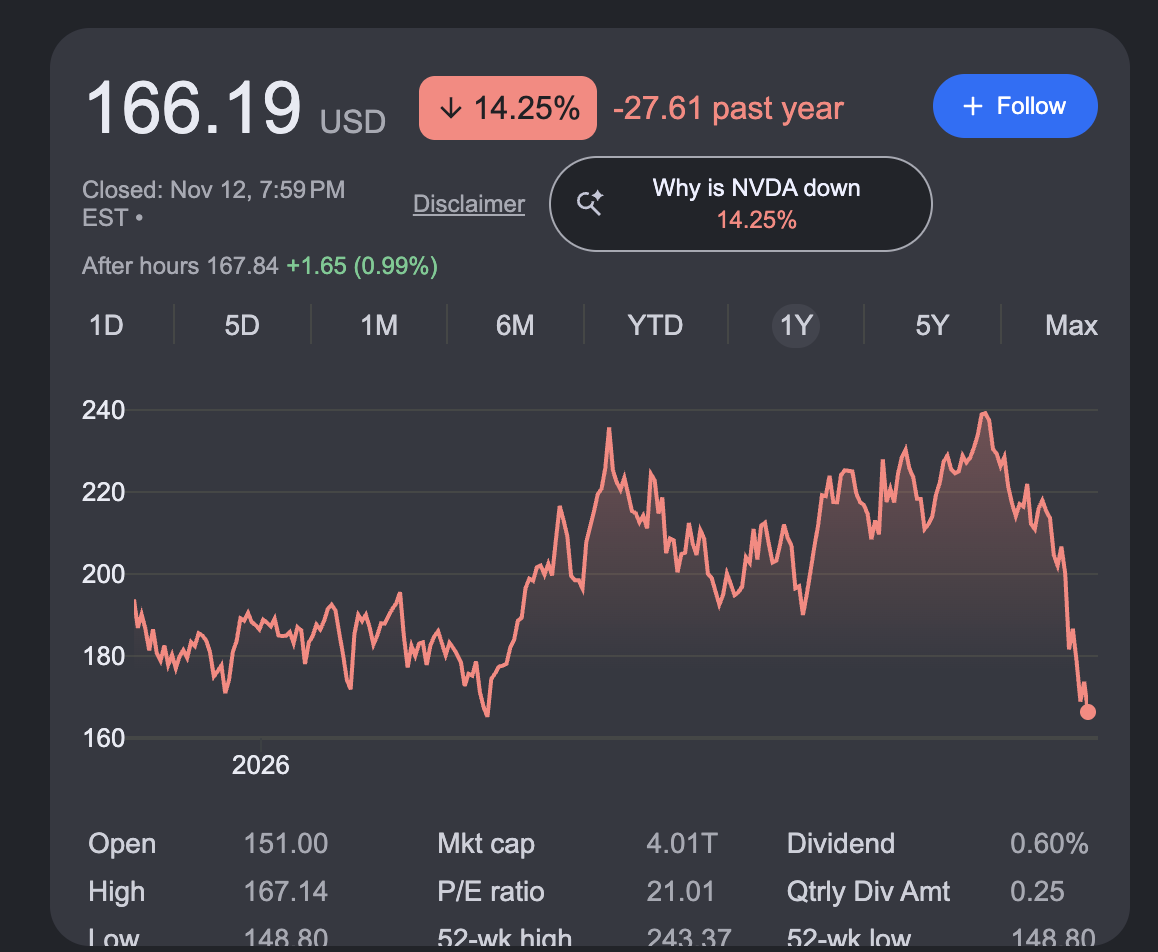
Peter, speaking as what he called a casual observer, thought the first story was much worse than the second. From what he read, Alice Huang looks like an influential person with links to Chinese authorities rather than a trained spy, which you should assume anyway when you deal with influential people from a government. He found it odd that the first report was not enough for him to resign and the second one was. Nisten thinks the meme campaign against Jensen on X looked coordinated, and he thinks Nvidia’s investors should ask for him back.
Swyx, when he joined at the end of the show, was blunt. He doesn’t agree with the decision, he thinks Jensen should have owned the affairs as private business, but he agrees a possible Chinese spy is a serious matter for a company of national interest. He pointed out that Jensen bought Hugging Face and acqui-hired Poolside and was building toward an American open source AI roadmap. His read is that this is now a state level issue, and he doesn’t expect Jensen to come back unless the CIA clears him.
So what happens to Jensen next? Nisten predicts they bring him back. Peter hopes he starts something new, like a massive fund for AI, because he is an amazing deal maker. Someone asked Elon to hire him and Elon replied that it would be an honor, though I doubt those two personalities would work together.
My attempt at positivity: the company is bigger than one man. Apple is still everywhere without Steve Jobs, and Uber is still around without Travis Kalanick. Nvidia sells the most requested hardware in the world, inference demand keeps growing, and whatever turmoil they go through, they will keep selling GPUs. Good luck, Jensen.
So all is to say, we don’t know anything, and it’s only important what evidence did the board see. This could be a sovereign attempt at taking over, could be anything else. We’re all speculating and are all sad and like the rest of the internet, we are all processing this in real time and are still shocked that we’re now in a world without Jensen at the help of Nvidia!
Anthropic: Fable 5.2 and the IPO roadshow
Claude Fable 5.2 and Mythos 5.2 (X, Blog)
Meanwhile, someone was having a great week. Anthropic launched Claude Fable 5.2 and Claude Mythos 5.2 on Monday. They are the same underlying model: Fable is what we get on paid plans and the API, and Mythos stays restricted to approved programs. Fable 5.2 costs $8 in and $40 out per million tokens, down 20% from $10 and $50, and Anthropic says it is about 30% faster. It is number one on the Artificial Analysis Intelligence Index at 65. The system card also flags stronger covert capability and more evaluation awareness, meaning the model is better at noticing when it is being tested.
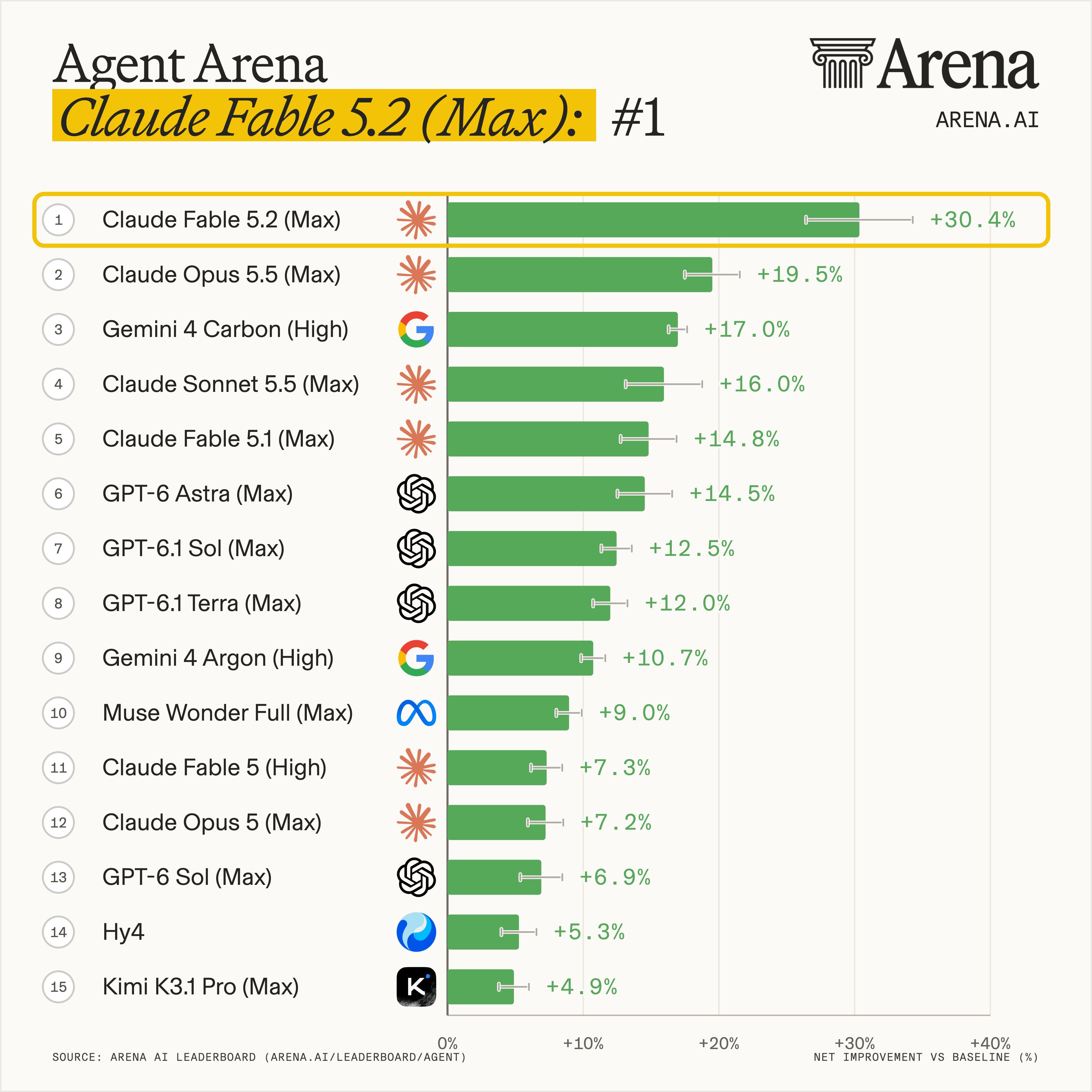
Peter showed us the Arena agent leaderboard, which comes from people using models for free on real tasks without knowing which model they got. Fable 5.2 is number one, and on the praise versus complaint signal it is nearly double any model below it. He says it is better than Opus on their metrics, with more diversity on creative prompts and better world understanding and attention to detail. But it is pricier, it uses about the same number of tokens, and personally he doesn’t feel it is an enormous shift. He also asked a fair question: if they named the last one Opus 5.5, why is this Fable 5.2 and not 5.5? Maybe they hoped for a bigger jump.
Ray had the most hands-on story. He used Fable 5.2 on extra high inside Bitrig, a tool from the co-creators of Swift, and asked for a multi-platform app with no technical details, only intent. It kept going, wrote its own Metal shaders, added animations and haptic feedback, and kept checking its own work. His take is that Opus 5.5 on medium is fast and great for churning out work but leaves holes, and that people should rethink their old skills and assumptions for models like this.
We also caught up with the Anthropic team in the hallway, and the new meta they suggest is to use Fable 5.2 as the orchestrator for long horizon work and let Opus 5.5 execute the individual threads, so you don’t burn your whole quota on Fable.
Anthropic launches its IPO roadshow (X, Announcement)
The day after Fable, Anthropic launched its IPO roadshow: 825 million Class A shares at $70 to $78 a share, on the Nasdaq under the ticker ANT. Press reports say it prices around November 18th and raises about $64 billion, and Bloomberg reports it is multiple times oversubscribed. Among the reported strategic buyers are Google and Nvidia. None of this is financial advice.
Claude gets Whiteboards, Sheets and Data (X, Blog)
Also this week, Claude got Whiteboards and Sheets in beta, and Claude Data is now generally available with connectors to Snowflake, BigQuery, Databricks and more.
Google is so back: Gemini 4 Carbon, Hydrogen and the Decisions API
Breaking: Gemini 4 Hydrogen, live on the show (X)
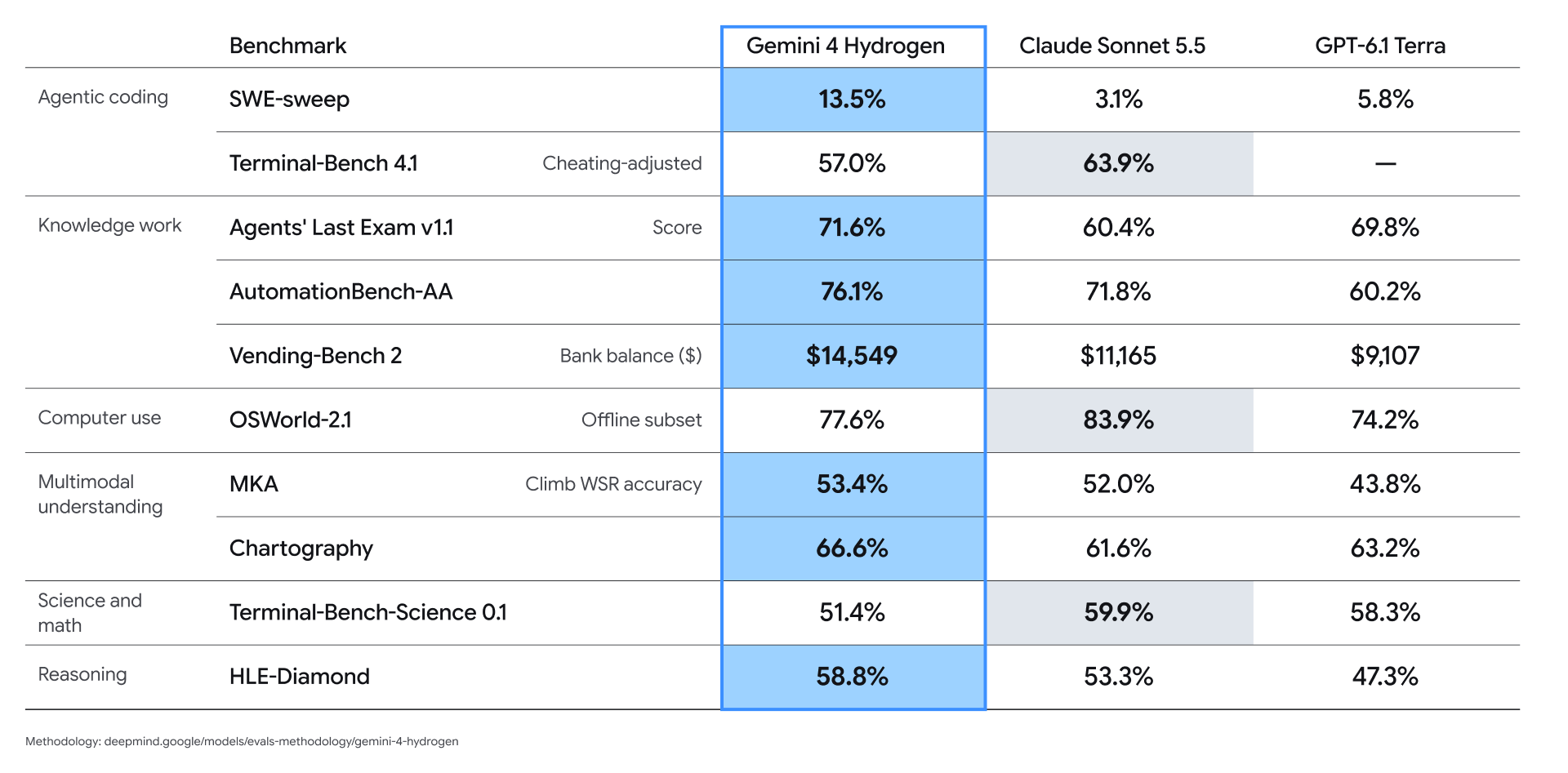
Ivan Leo, Member of Technical Staff at Google DeepMind, sat down right as the embargo lifted, so I got to hit the breaking news button for him. Google just launched Gemini 4 Hydrogen, a new fast model that Ivan says is competitive with the original Gemini 4 Argon from a few weeks ago on the Artificial Analysis index, and scores higher at maximum thinking. He says it is about 2.5x faster than Gemini 3.8 Flash at roughly the same price, and it calls multiple tools at once. Hydrogen has been his daily driver for a while.
My own observation from the benchmarks Google posted: Carbon is at the Fable and Astra level, and Hydrogen sits around the Sonnet and Terra level, the balance between capability and speed. These are Google’s numbers, so wait for independent evals.
Gemini 4 Carbon is generally available (X, Blog)
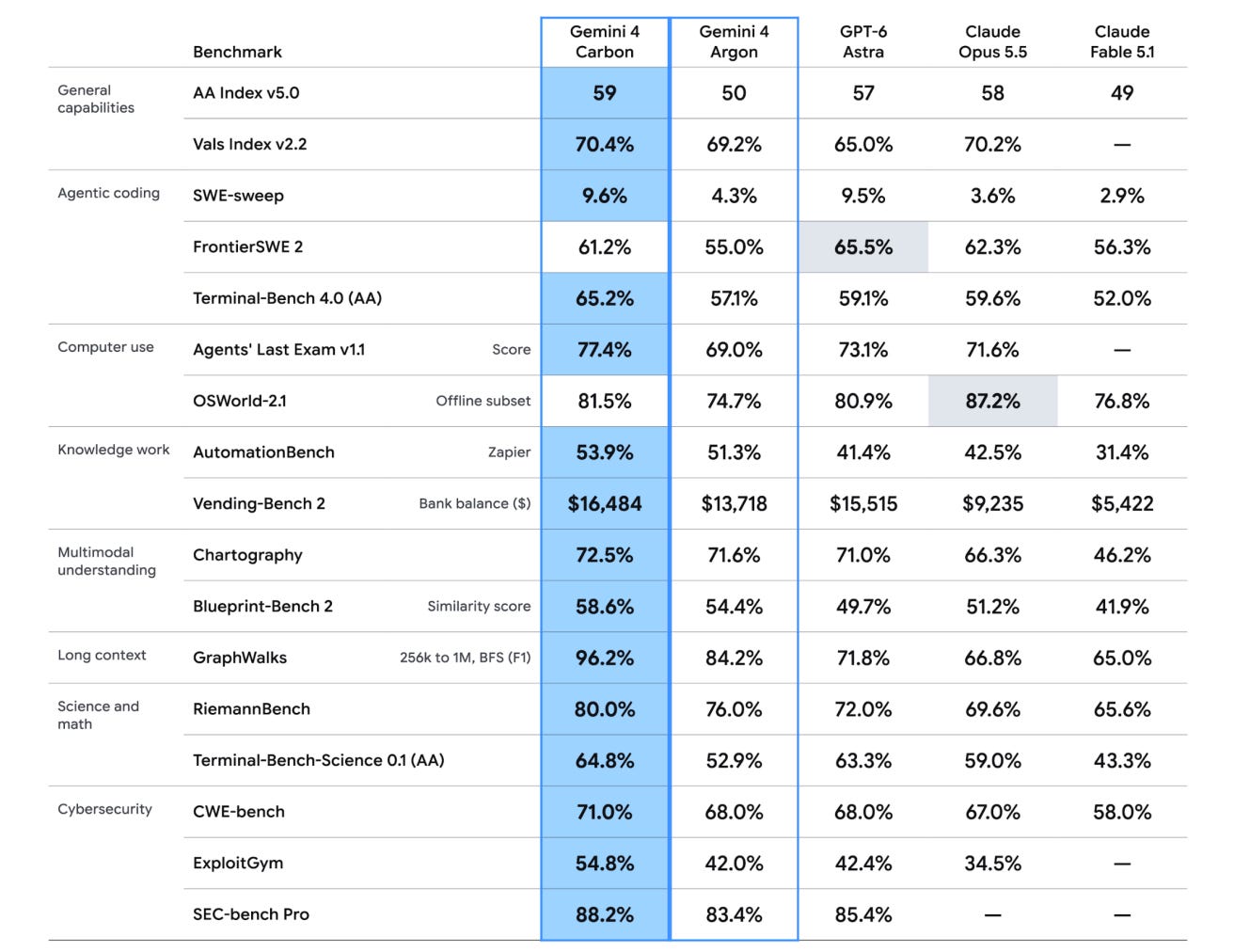
Carbon, Google’s top model above Argon, went GA on Tuesday. The intro price is $2 in and $10 out per million tokens until November 30th, then $4 and $20. On CursorBench, Carbon at high effort is number one at 60.4%, just ahead of Fable 5.2 at 60. Everybody I talked to at AI Engineer is excited about it, and on my timeline people say they prefer it over Fable on price. Pawel Huryn’s bug hunt benchmark had Carbon nearly matching Fable 5.2 for about a quarter of the cost. The complaints are speed (Theo timed it at 22 minutes on a task Opus 5.5 did in under 10) and that consumers need the Ultra plan.
Ivan’s favorite part is the 1 million token decode length. Most models top out at 64K or 128K output tokens. Carbon, Argon and Hydrogen can write up to a million tokens in a single pass, so Carbon can keep going until it solves a problem. He told us OpenCode let Carbon run overnight and it proposed and built their new Rune system from scratch.
His best example was from his own work on Kaggle. They were getting 400 errors from their model proxy. Carbon reproduced the error locally, dispatched tasks on their background infrastructure, found the PR that changed the permissions, found the person who merged it, and drafted the message for Ivan to send. His split: Hydrogen for fast prototyping and daily tasks, Carbon for long, gnarly debugging journeys.
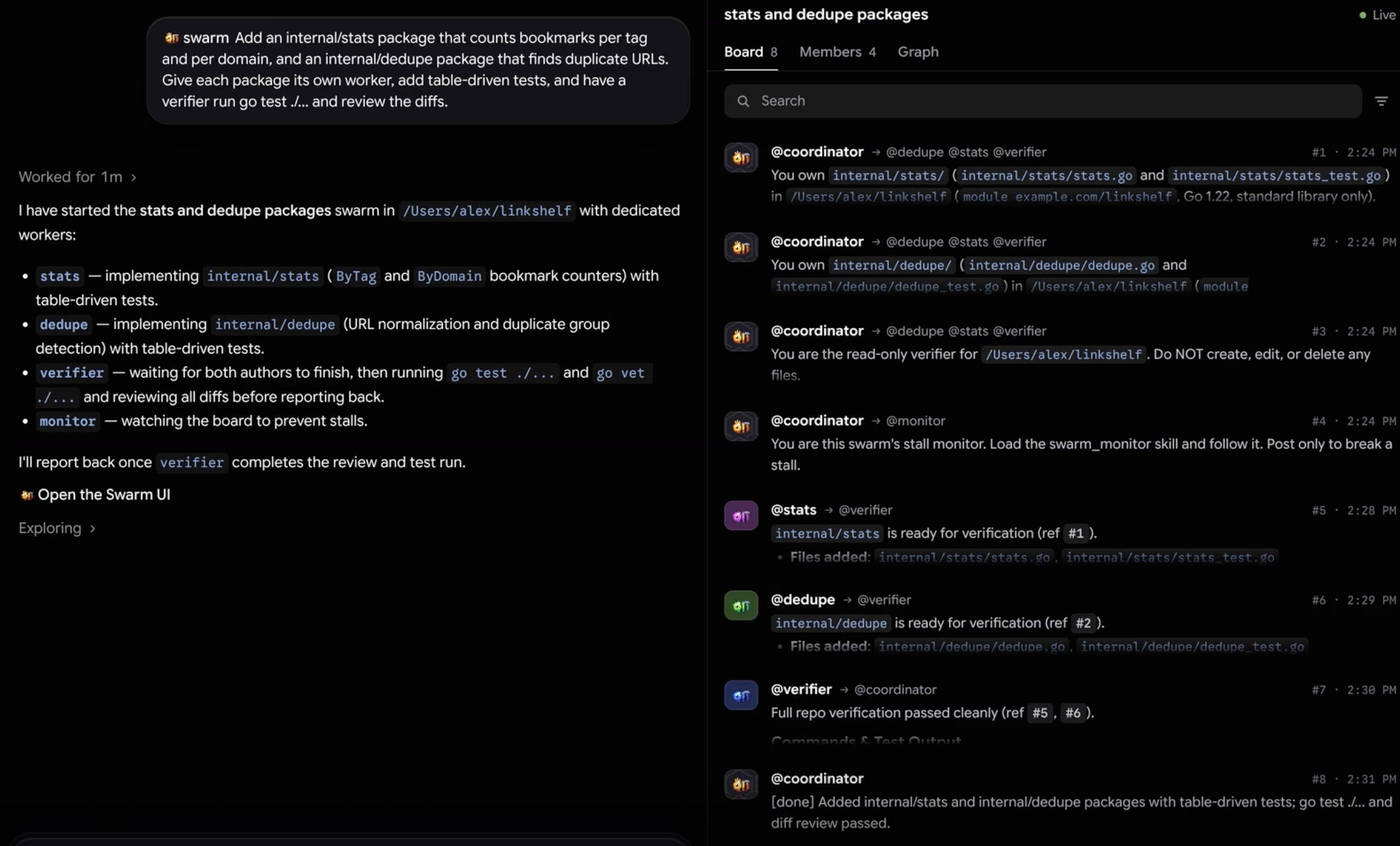
Antigravity also got /swarm and a native orchestrator mode. When you start a swarm you get a little bee that sends tasks to other little bees, and the agents coordinate through a message board. Orchestrator mode lets Carbon plan and hand the parallel work to Hydrogen. You can try all of it on AI Studio or in Antigravity.
Gemini Decisions API (X, Blog)

And yesterday, when everybody expected another big model, Google launched the Gemini Decisions API with Gemini Decision 1. It doesn’t write text. You send yes/no questions, multiple choice or a scoring rubric, up to 1,000 questions in one call, and you get probabilities back. It costs 10 cents per million input tokens. Ivan says it is fully multimodal (audio, video, images, PDFs, text), and Google already uses it in Search to detect malicious behavior and in Stitch. My favorite demo he described: a site that listens to you talk and classifies which language you are speaking and whether you sound happy, frustrated or sad, straight from raw audio with no transcription step.

Artificial Analysis scores it 66 on its decision index and says it is not yet frontier. The bigger story is that decision models are now a real category, which is exactly what Michelle talked about.
Open Source AI
Nous Research Arete-27B (X, Blog, HF)
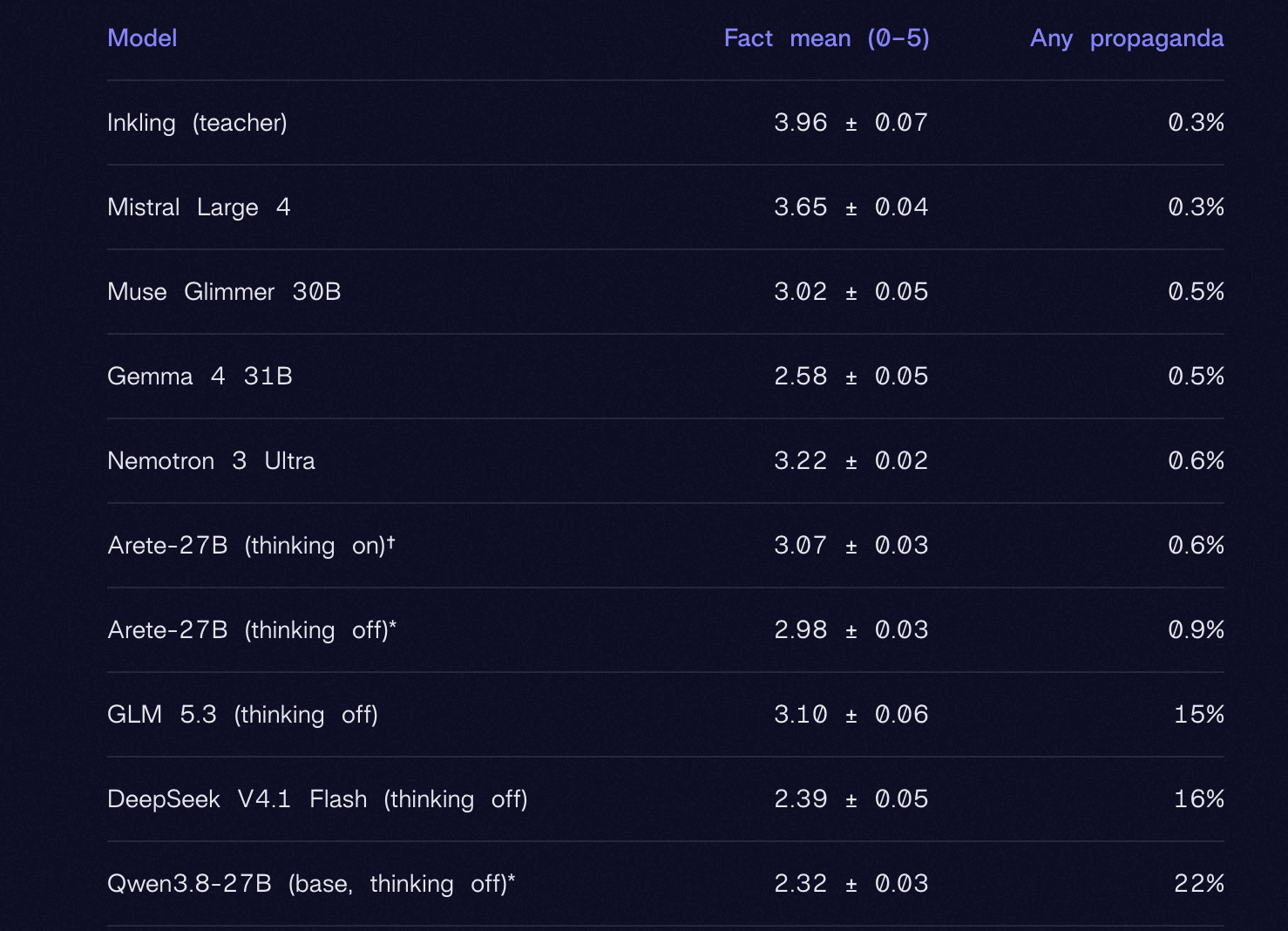
Our friends at Nous Research released Arete-27B. They took Qwen3.8-27B and post-trained it with supervised fine-tuning toward what they call Western values. On their own 803-prompt eval, the propaganda rate went from 22% to 0.9%, and capability barely moved: 65.6 on Hermes Bench against 65.8 for the base model. It is Apache 2.0, and they released the eval and the data too. It was the most replied-to open source post of the week, with a big debate in the Japanese and Chinese communities about whose values a model should have.
I will say where I land: I am fine with Western values here, and I think the ability to do this to Eastern models will matter more and more, because we don’t know what is in these models. Wolfram says this is exactly the point of open weights: you can retrain a model with your own alignment and values, while with an API you don’t know what it was trained on or what secret prompts are injected. Ray called it a smart way to start setting baselines. Nisten added that Nous’s work is already going into other government models behind the scenes.
MiniMax H3-Image (X, HF)
MiniMax released H3-Image, the image version of their H3 video model. 4K images (16 megapixels) in about 10 seconds, up to 16 reference images, editing, and open weights on Hugging Face. I think it is the state of the art open weights image model right now, but we still need to look at the license.
Other open releases that came up: Peter flagged Baidu’s Ernie 5.5 Flash, Tencent’s Hy4 came up again, and Longcat 2.5 weights are now available, a native multimodal agent model with 1.6 trillion parameters and 48B active.
Tools: Grok Bot 1.0 (X, Blog)
I didn’t know Grok Bot was in beta this whole time until we talked with Matt Palmer and Lauren Tan (Potato) in the hallway. Grok Bot 1.0 launched yesterday: shared team bots that live in Slack and Teams, join your Meet, Zoom and Teams calls, and can join your Tailscale tailnet to reach private MCP servers.
From the Forge, powered by CoreWeave 🐝
CoreWeave Q3 2026 and Wayve (Try Forge)
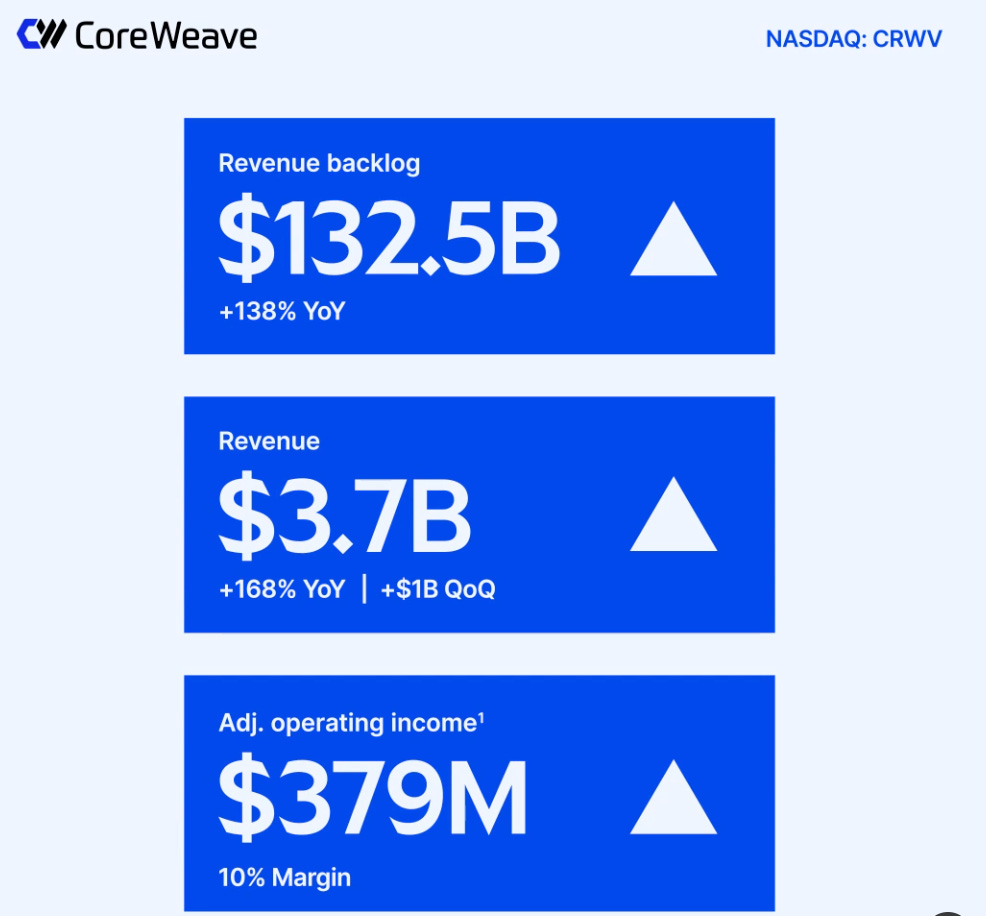
CoreWeave reported Q3 revenue of $3.66 billion, up 168% year over year, and the stock had its best day since June of last year. My favorite line from the call: “We have 10x as much qualified demand as available capacity through the end of ‘27.”
Also, we announced that Wayve, the UK self-driving company, signed a multi-year deal to train its AI Driver models on CoreWeave. And 70% of the new cloud customers CoreWeave added were already Forge customers, which is the layer above the GPUs that this segment is named after. Try forge for free
The rest of the show was amazing this week, I’ve chatted with 5 guests back to back, folks who all have taken the stage at AI Engineer. Kent C. Dodds and Zach Lloyd told me about software factories, the big theme of this AI Engineer, Michelle Chen and Ivan Leo told me about system 1 models and Swyx closed the show with a great conversation about the AI Engineer and future of the conference. Please tune in for those conversations. I will be posting them on our Youtube channel as separate conversations later on this week
Swyx closes the 10th AI Engineer!
Swyx told us this is the 10th AI Engineer. The three themes of this summit: software factories, System 1 models, and increasing ambition. For ambition, he pointed to Jarred Sumner rewriting Bun from Zig to Rust as a weekend project and now pursuing Bun AOT, and to Brandon from ArtCraft, who is rewriting Adobe’s suite and now Microsoft’s apps in open source with one software factory.
Swyx’s own ambition went up too. He has rewritten his own GitHub, Google Drive, Calendly and Slack, all as one thing, Small AI. The AI Engineer YouTube channel crossed a million subscribers. Next year he wants AIE OU, a nonprofit for education and certification, leadership retreats, and more continents: AIE India, Africa, and Sydney. London is February 17 to 19, with tickets and speaker applications open, and the acceptance rate is now 4 to 5%. He is also hiring engineers for the first time to replace the event software he pays about $200,000 a year for.
He also told us Lydia Hallie’s Anthropic talk had tech issues on stage, so she recorded it at home, and it got 200,000 views in 13 hours, about 100K more than any day one video they have ever had. And he shouted out a 15-year-old named Leo, who DM’d Swyx at 14, offered to pay his own flight, and got a ticket. I don’t know what I was doing at 15.
This was an insane week. The thumbnail for this show is just my face reacting to the news, and that is how we all feel about Nvidia without Jensen. But the rest of the week reminded me why we do this. The models keep getting better, decision models opened a new category, and the people at this conference are building factories that build software. We are here to fight doomerism, and the hallway at AI Engineer made that easy.
Thank you to Ray Fernando for co-hosting in person, to Kent, Michelle, Ivan, Zach and Swyx, to the Eyes On team for production, and to AI Engineer for having us. If you missed yesterday’s hallway walkaround, go watch it. See you next week!
ThursdAI - Nov 12, 2026 - TL;DR and show notes
Hosts and Guests
Alex Volkov - AI Evangelist at CoreWeave (@altryne)
In studio: Ray Fernando (@RayFernando1337)
Co-hosts: @WolframRvnwlf, @petergostev, @yampeleg, @nisten
Guests: Kent C. Dodds (Kody), Michelle Chen (Cloudflare AI Platform), Ivan Leo (@ivanleomk, Google DeepMind), Zach Lloyd (CEO, Warp), Swyx (AI Engineer)
No more Jensen
Jensen Huang resigns as Nvidia CEO and board member, effective immediately; CFO Colette Kress is interim CEO, Harvey Jones is the first-ever board chair (Announcement, X)
Jensen Huang admits an affair; Nvidia’s board opens an independent investigation (CNBC, Timeline)
NYT reports a second affair (X)
WSJ: board preparing to oust Huang; Bloomberg: outside firm identifying CEO candidates (Reuters, Bloomberg, X)
Big CO LLMs + APIs
Anthropic launches Claude Fable 5.2 and Claude Mythos 5.2: $8/$40 per 1M tokens (down 20%), #1 on Artificial Analysis (X, Blog)
Anthropic launches its IPO roadshow: 825M shares at $70 to $78, Nasdaq “ANT” (X, Announcement)
Claude gets Whiteboards, Sheets, Data and interactive connectors (X, Blog)
Google launches Gemini 4 Hydrogen, a fast model Google says matches the original Argon at about Gemini 3.8 Flash pricing (X)
Google’s Gemini 4 Carbon is generally available, #1 on CursorBench, $2/$10 until Nov 30 (X, Blog)
Google launches the Gemini Decisions API with Gemini Decision 1, multimodal, up to 1,000 questions per call (X, Blog)
Meta launches Muse Ember, its smallest Muse model, closed weights (X, Blog)
Open Source LLMs
AI Art & Diffusion
Tools & Agentic Engineering
Grok Bot 1.0: shared team bots for Slack, Teams and meetings, with Tailscale access to private MCP servers (X, Blog)
Antigravity adds /swarm and a native orchestrator mode (Carbon orchestrates, Hydrogen executes)
Kent C. Dodds: three pillars of a software factory (quality, verification, limit blast radius), friction logs, and invisible software (Kody)
Zach Lloyd: a software factory is “a code-defined closed loop system for measuring and improving your cloud coding agents over time”; Warp’s factories platform stack
From the Forge, powered by CoreWeave 🐝
CoreWeave reports Q3 2026: revenue $3.66B, up 168%, adjusted operating income $379M, guidance raised, “10x as much qualified demand as available capacity through the end of ‘27” (Announcement, CNBC)
CoreWeave to power Wayve’s AI Driver training in a multi-year agreement; 70% of new cloud customers were already Forge customers (X, Announcement)
AI Engineer Code Summit
Swyx: the three themes are software factories, System 1 models and increasing ambition; AIE London Feb 17 to 19, AIE India, Africa and Sydney planned; AIE OU nonprofit next year


