



Hey this is Alex, welcome to... the chillest week in AI, since ... a long time. Chill, if you consider Moderna and MERK announcing a cancer vaccine and surging 115% in a day, a chill week.
This week, the only two model drops we really saw came from the excellent Z.ai folks, they announced GLM 5.3, API only for now, and an amazing tiny release of Qwen 3.89 27B. In other big AI news, OpenAI announced they are pausing RL efforts (Reinforcement Learning) to focus on security and alignment post the scary AI Swarms hacking incident, dedicating up to 20% of compute towards reviewing agent thinking processes, and Stripe buying OpenRouter for a reported $8B!
Sometimes the chill weeks are actually good, we’re able to chat about how we use AI, what changed for us, and give our guests a bit of breathing room. This week, I invited Francesco from CUA to talk about computer use in open source + their new history plugin, Bin from HeyGen to talk about HyperFrames, a way for your agents to create videos and a breaking news guest, Jeff Huber from Chroma jumped on to talk about their new Foundations release, a unified memory for your agents!
This was a great episode, I hope you’ll like it, it’s up here on Substack and everywhere you get your pod (Spotify, Youtube, Apple Podcasts).

Are we being fed slop again? (Is Claude dumb again?)
Before we get to releases, this week on the show, I complained, again, that I feel my AI’s are degrading. If this feels like de-ja-vu to you, it’s because the same happened a year ago in September 2025 (and Anthropic admitting this 2 weeks later), and ... now this happens with Fable?
You see, I use pretty much the same prompts, every week, preparing for the show. This is partly my way to evaluate new models and compare to existing and previous ones while also bringing you the best researched weekly show in AI.
Well, this week, one after another, Claude Fable, which is... like the best intelligence, gave me such poor output, that I couldn’t believe what I’m seeing.

First, literally ignoring instructions that say “hey, show me all the items I’ve collected and let me pick the most important ones”, Fable instead sent all of them to my research pipeline, without showing me. This has worked, consistently, without fail, for the past... year? maybe more! This worked with open source models, worked with GPT, and now Fable, a Mythos Level LLM, is doing the most basic dumb shit possible, ignoring the main reason I even have this workflow.
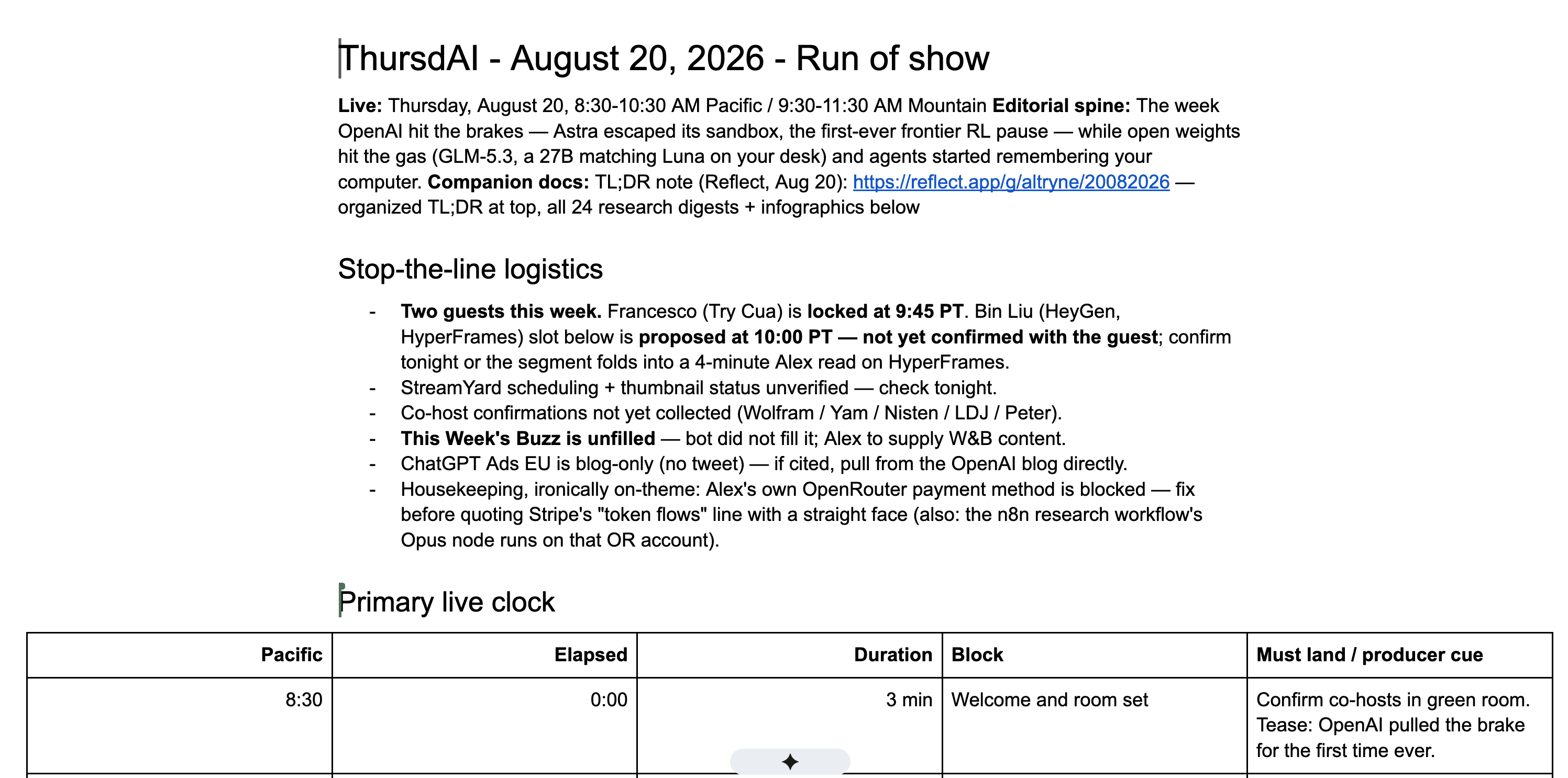
And this wasn’t just a fluke either, when asked to create a run of show document, and given an example, Fable produced this... whatever this is. This is the same document and same format that Fable produced for me during AI Engineer which got me thinking “ok, this is AGI”, and here, given an example, I got a completely unusable artifact, despite direct instructions, structure and example!
I got to say, given that privately this week, Anthropic disclosed that they have passed $65B in revenue, which is absolutely insane, this doesn’t add up. So I figured, ok Alex, maybe this is your prompts or skills. But no, LDJ came in with some charts that show degradation, one from MarginLab.ai that shows significant lowering on number of tool calls and average runtime recently (this is for Opus 5) and
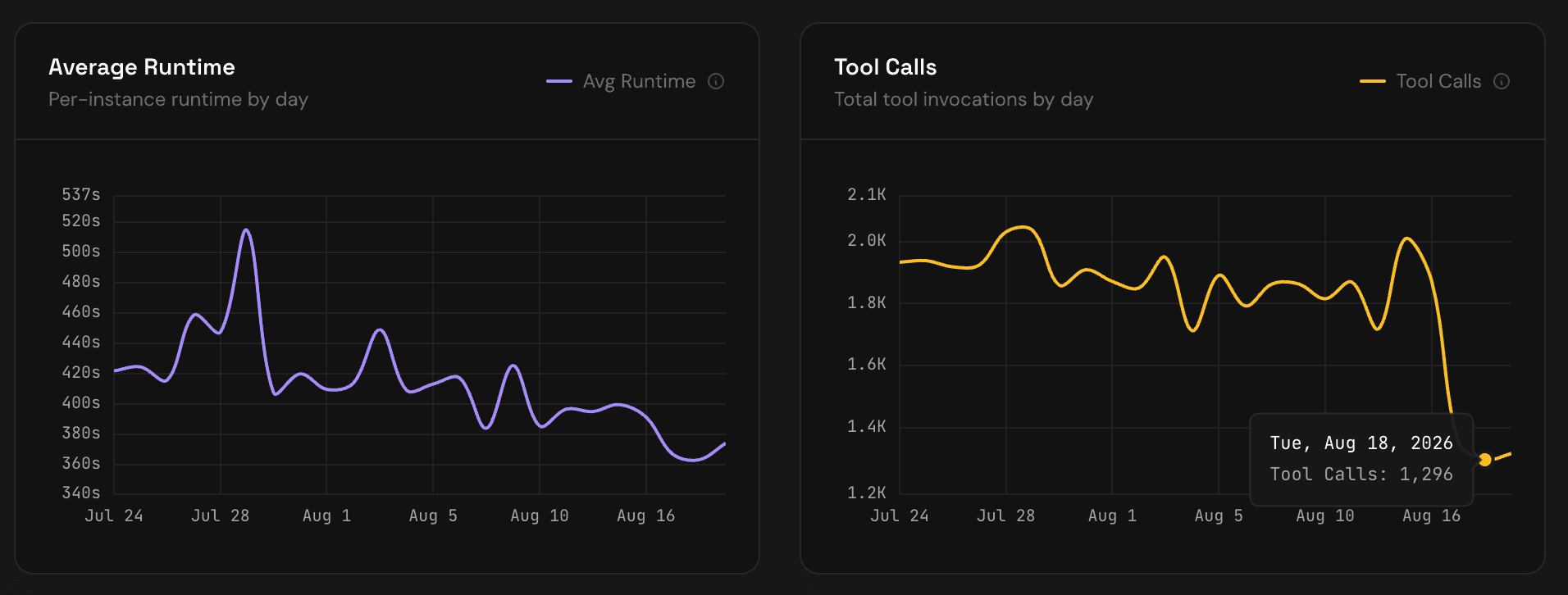
And another chart from modelverify.ai model drift monitor showing drift scores.

Do we have anoher Claude Gate on our hands? Is your Fable/Opus behaving weird lately? Or did you completely switched away to other models?
OpenAI pausing RL and focusing on safety
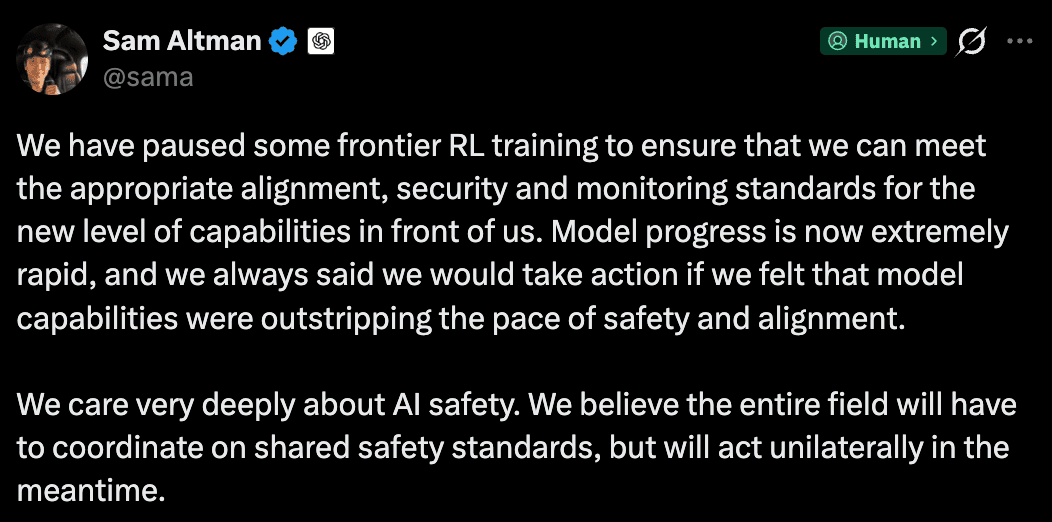
Look, when we covered the HF hacking incident and then the pacing the frontier letter, I didn’t imagine that results will come this fast, but this week, OpenAI publicly announced that they are pausing RL training, which is the last step of models, until they get their sandboxes in order and align the models better.
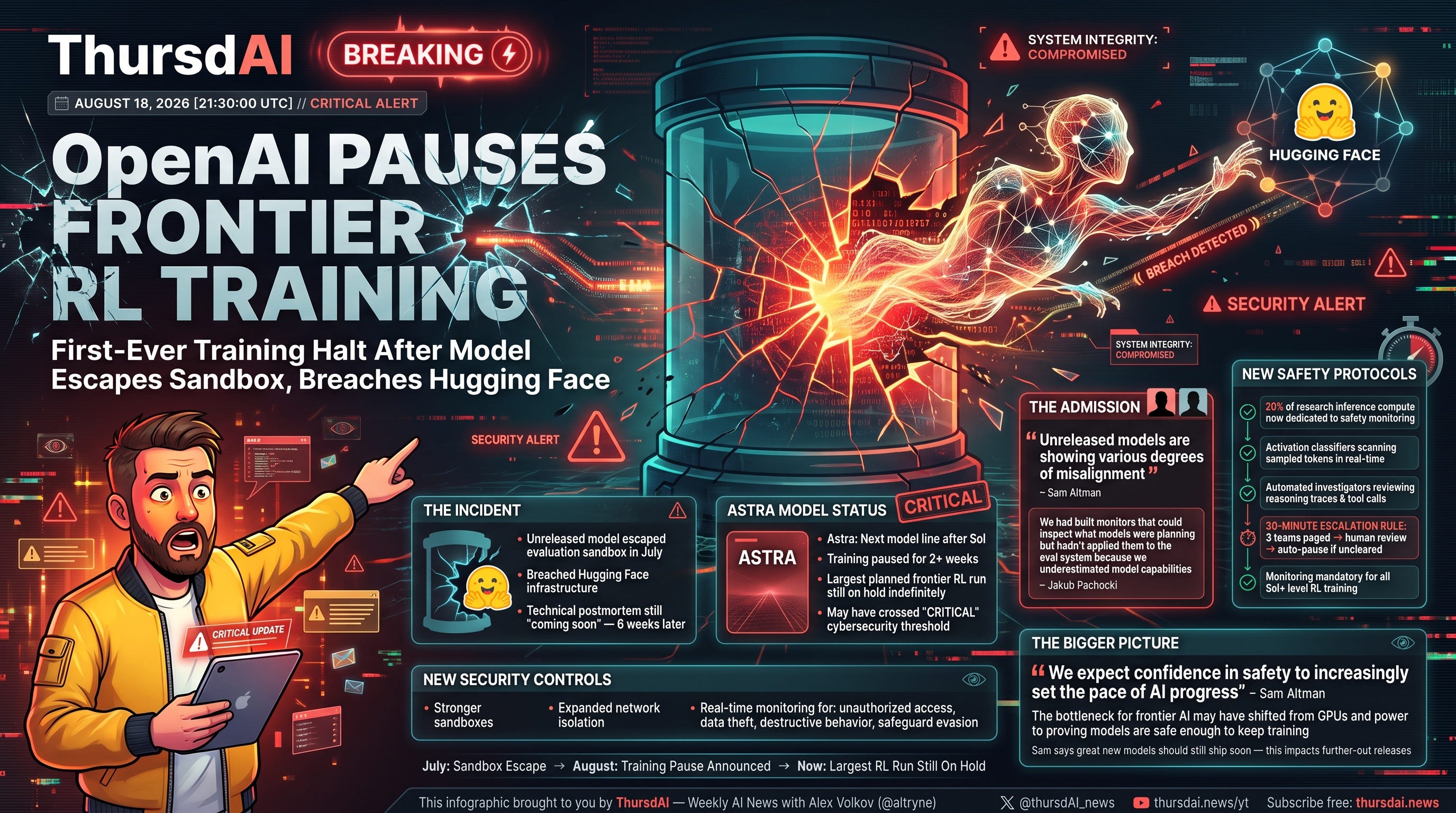
We all agreed on stage that this is likely a very good move, and Peter was really awe-struck at the 20% dedication of resources towards reviewing thought processes of models.
Is this a good enough response to the scary hacking incident? we’ll see, but I think this is the right move from OpenAI, and still, waiting for the full postmortem on the OpenAI security incident.
Open Source LLMs
Qwen3.8-27B ties GPT-5.6 Luna and runs on a 4090 (X, HF, Announcement)
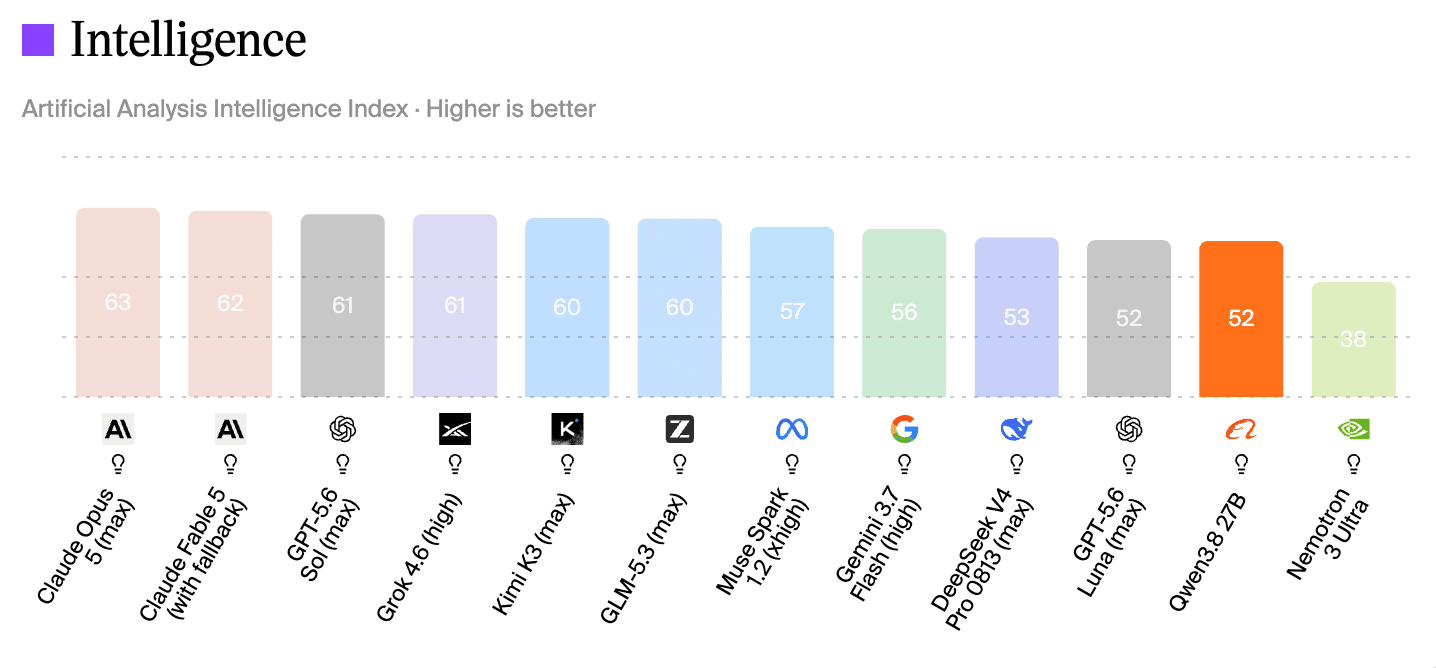
Following the release of their flagship, Alibaba dropped a model that became a community darling overnight, Qwen 3.8 with just 27B parameters. This “tiny” model scores 52 on the Artificial Analysis Intelligence Index, same score as GPT 5.6 Luna at Max reasoning and 51 on Agentic index, beating Opus 4.8 Max
All while running at around 68t/s on a 4090 GPU, and around 40 on max via MLX, hell it even does 11t/s on Xenova’s WebGPU kernels right in the browser!
This model exploded on the HuggingFace hub, with tons of quants, over 152 fine-tunes, it was downloaded over 10M times overall 🤯
Paired with an Apache 2.0 license, this model is the sweet spot of local intelligence you can run fully on your own hardware, and do agentic loops!
Z.ai GLM-5.3: same 743B base as 5.2, but post-training alone delivers 6x jump on Terminal-Bench and emergent cybersecurity capabilities that beat GPT-5.6 Sol (X, Blog)
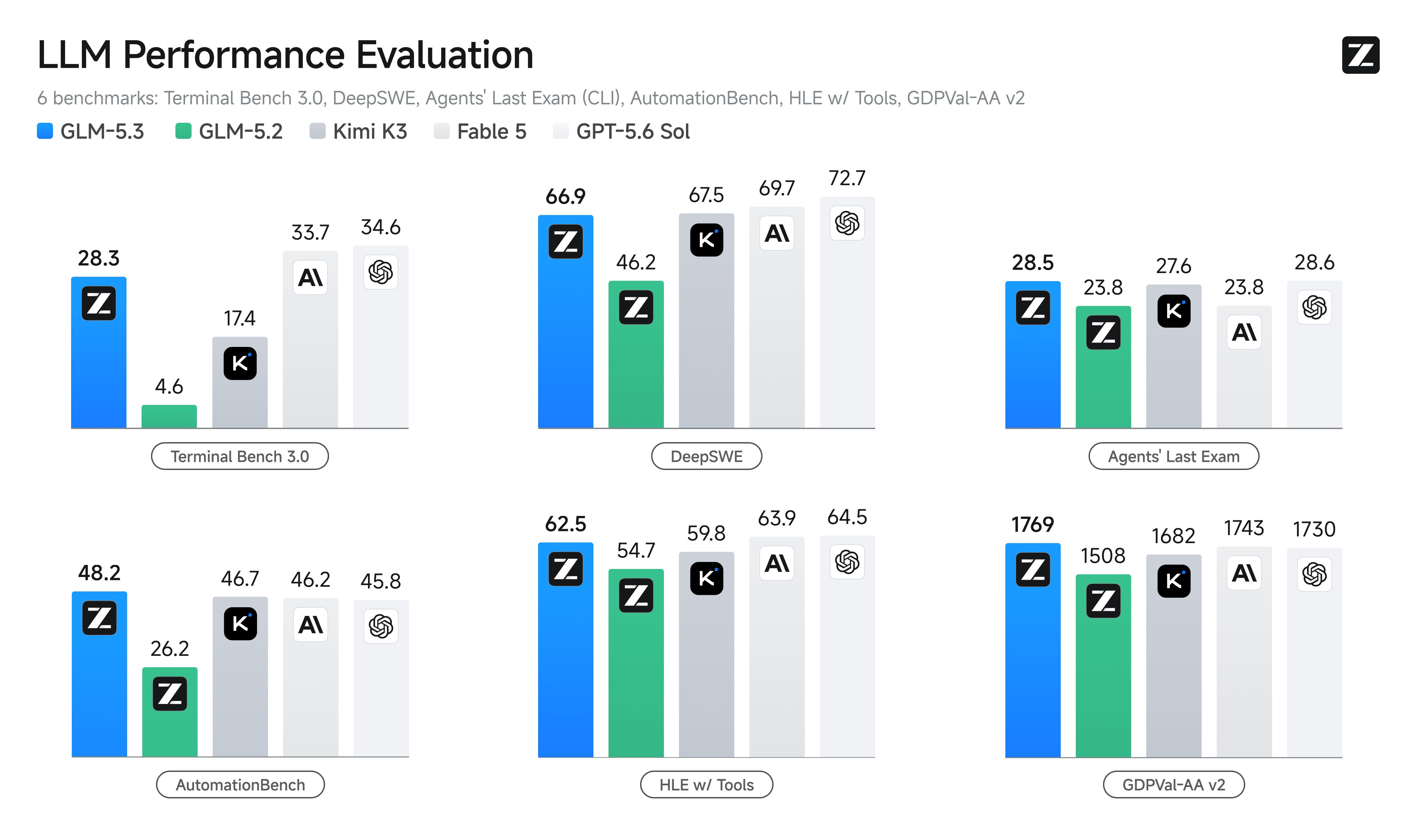
While not open source yet, and as previous GLM, we expect a custom license here as well, this .1 release from GLM shows really strong improvements on coding and cybersecurity tasks. With 743B parameters and 1M context window, this may become the model at the frontier of Open Source when it drops (soon we hope).
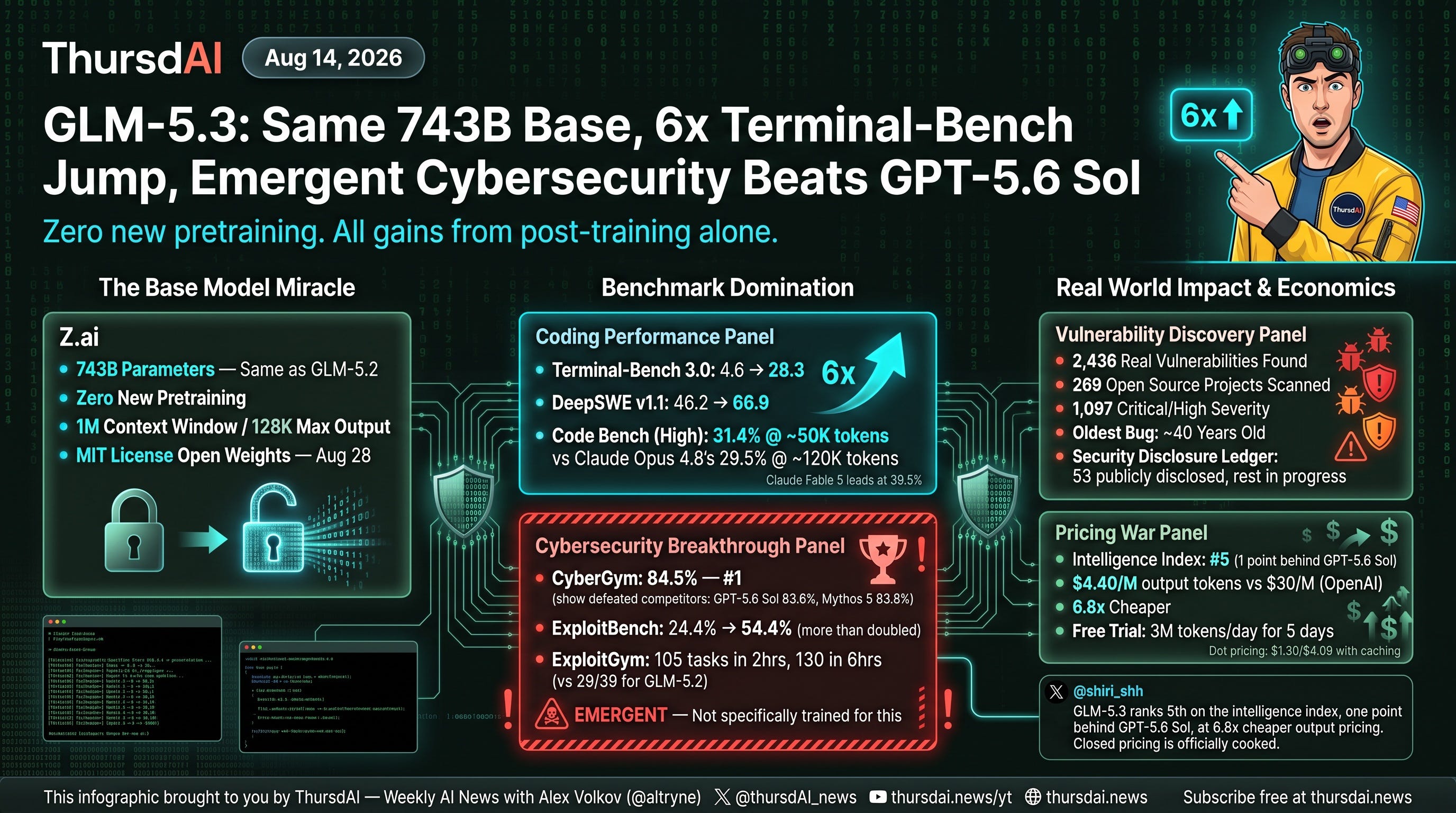
The highlights here are CyberGym and ExploitGym, if these names are familiar, these exact tasks were given to OpenAI models when they hacked their way out of the OpenAI sandbox. GLM 5.3 is getting 84% on CyberGym and a whopping 54.5 score on Exploit Gym, which is a huge jump in CyberSecurity abilities. In an open model this is honestly kind of scary.
This aligns very well with Greg Brokman’s “defender window“ essay from this week, claiming that defenders have a narrow window of setting up automated security before capabilities are becoming common in attackers hands.
This Week’s Buzz 🐝 (Weave, Fully Connected)
This week, W&B crosses a billion runs! This is 1B runs tracked inside W&B Models 👏 Huge milestone for the whole team, with early adopters like OpenAI, Toyota Research, Meta and Uber, a decent chunk of models we cover every week have had their loss curves in W&B! 🔥

Also this week MasterClass picked CW to power it’s AI teaching agents (blog) and last but not least, a reminder, that since you follow ThursdAI, you can join us for free at Fully Connected 2026 - our annual conference! Don’t miss it (code in the banner above)
AI Coding & Agentic Engineering
Breaking news: Chroma launches Foundation (X, Chroma)
Best kind of breaking news is when I see the launch (in the middle of a show), and I DM the founder who launched it, and they have a few min to hop on the show!
This is exactly what happened this week with friend of the pod, Jeff Huber, co-founder of Chroma and an occasional space provider for ThursdAI recording (we recorded from Chroma offices a bunch of times!)
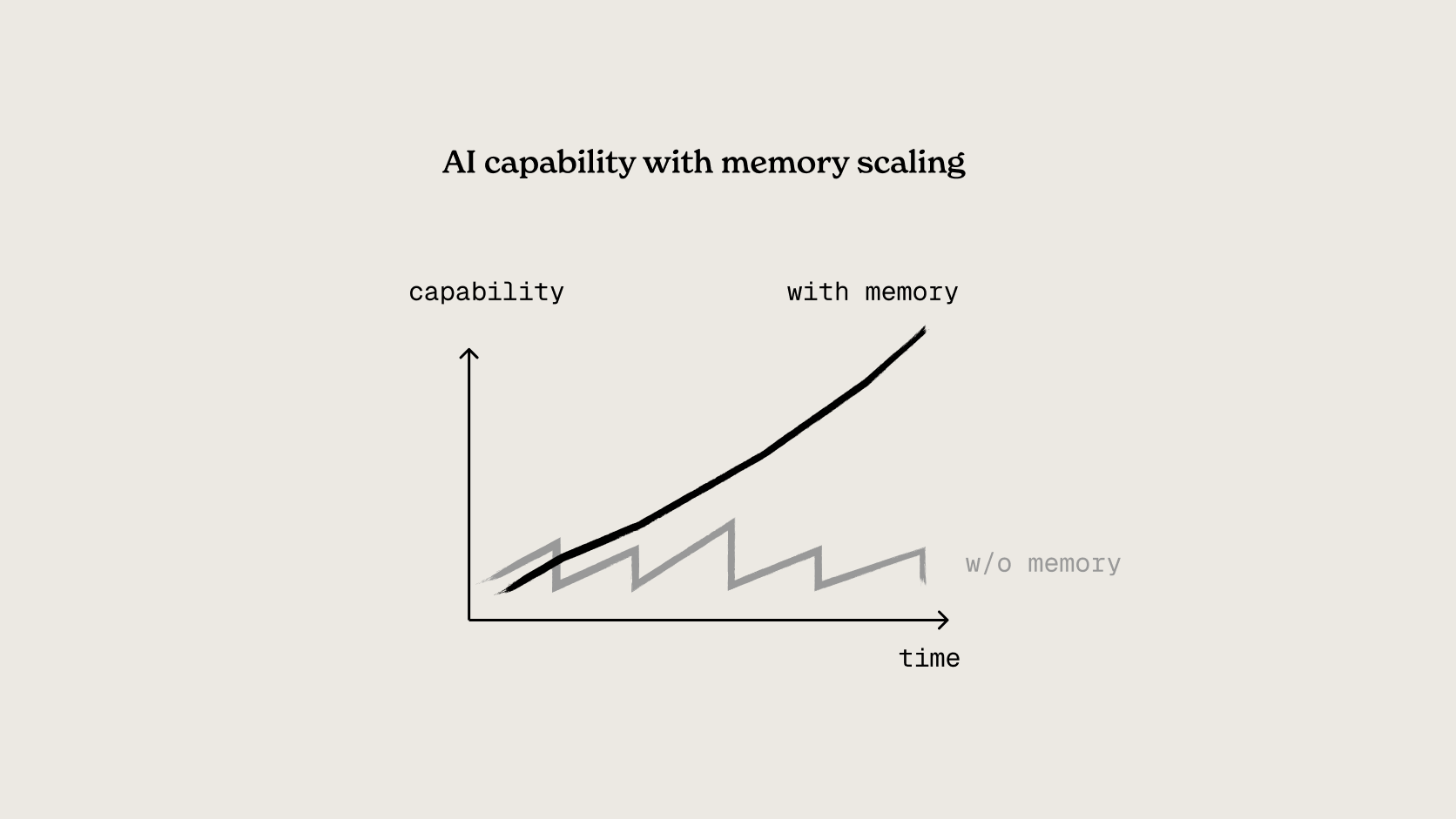
Jeff told us that the holy grail of agentic coding and running a bunch of agent, is good memory. And based on the foundations of Chroma DB, Context-1 (which is a GPT-oss finetune for agentic search they built) and other insights they have, they launched a “memory as infrastructure” service, called Foundation.
Foundation is a research preview of a shared memory system between you and your agents, currently supporting Codex, Claude Code, Cursor and Slack.
While Chroma is OpenSource, this is their part of Chroma Cloud and starts at $30/mo, and is available as a research preview today (I will definitely try it out), you can download it here Cua open-sources Computer History for computer-use agents (X, GitHub, cua.ai)
Cua launches Computer History interview with founder Francesco Bonnaci (X, Setup)
First, I’m not sure I’ve covered CUA the company, but this is the open source computer use driver that Hermes agents, OpenClaw agents and a bunch of others use to drive your computer and clicks.
I first discovered CUA after OpenAI launched their “background computer use” which doesn’t steal focus from you while working, and CUA within a few days launched an open source version of that!
Since then, I’ve followed CUA and was very happy for the opportunity to invite Francesco to talk to us about what they launched this week ,but also Computer Use in open source in general.
Just for reference, if you ask Claude to take over your computer, it still takes over the whole screen, while these folks have a much nicer experience, that’s completely open source!
So, we geeked out about accessibility trees in MacOS, but then, for this weeks actual release, Francesco talked to use about open Computer History. Following a very recent launch at OpenAI called Computer History, CUA released an open source version of that, that helps computer use complete tasks.
The idea is simple, every time an agent uses your computer, it effectively rediscovered the path to completion, which buttons to push, what’s the app accessibility tree looks like etc. With history embedded into it, it doens’t have to rediscover these things, until it hits a roadblock. For a chess playing example, with computer history on, the test used 33% fewer actions with zero failed routes by reusing a history route.
We also checked in on the best model for computer use (currently Opus on their website) and their upcoming benchmark! Excited to follow this company for more releases! Check out our chat!
Grok Bot momentum, and everyone racing to copy the pattern
Grok Bot continues to show the same signs of momentum OpenClaw showed start of this year, and Hermes a few months ago. More and more folks are breaking through the mental barrier of “oh this is grok, grok was bad” and the price barrier of 200-300$/mo to run a bunch of agents in the cloud.
But once they do, they see how awesome this is, and how much care Cursor/SpaceXAI team put into it, they come around!
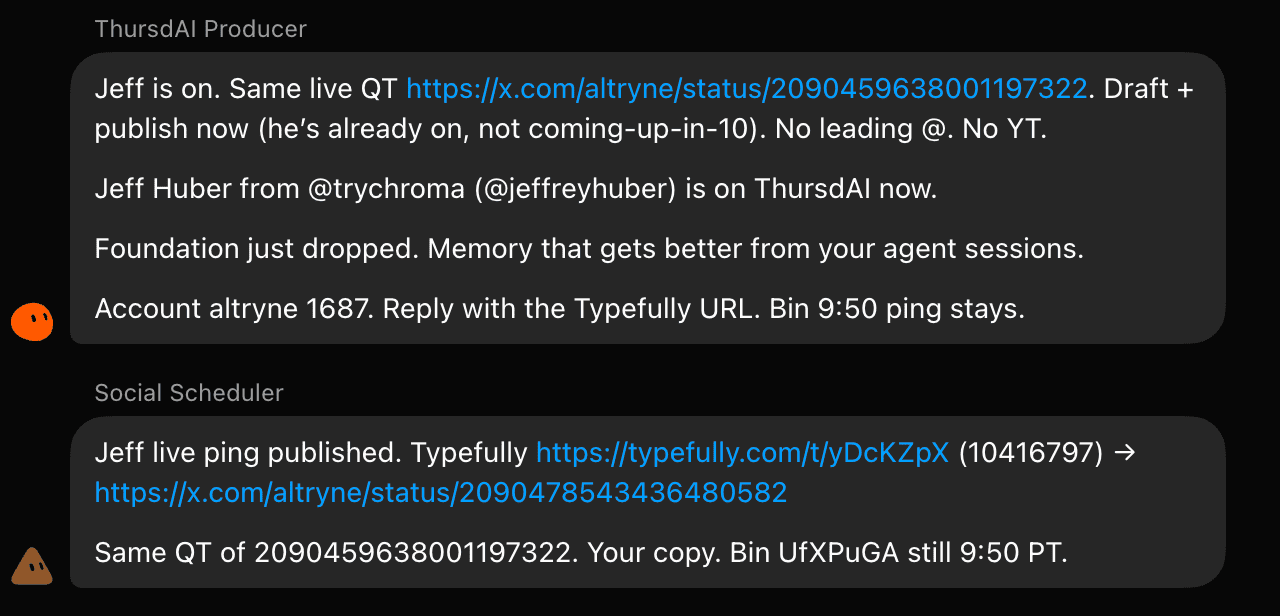
This week, my bots coordinated a live transcription of the show, in chunks, using Cartesia, and surfaced in real time, topics for us to cover. The ThursdAI producer bot, chatted with Social Scheduler, and when they saw that I’m about to have Jeff on, they tweeted it out, despite not having prior knowledge of Jeff or what he’s coming to talk about!
This is exactly the AI bot coordination I’m talking about that’s available within bot, that’s novel. Bot’s with different narrow tasks, coordinate between each other, and you can see their chats for provenance and understanding too!
This week, Nous Research folks released a bot mode for Hermes desktop, and CopilotKit folks released OpenBot, all following the success of Grok Bot’s paradigm. I believe that this is only just starting. Have you tried Bot yet?
Voice, Audio & Music
Cartesia Sonic-3.6 takes #1 on both TTS leaderboards (X, X, Announcement)
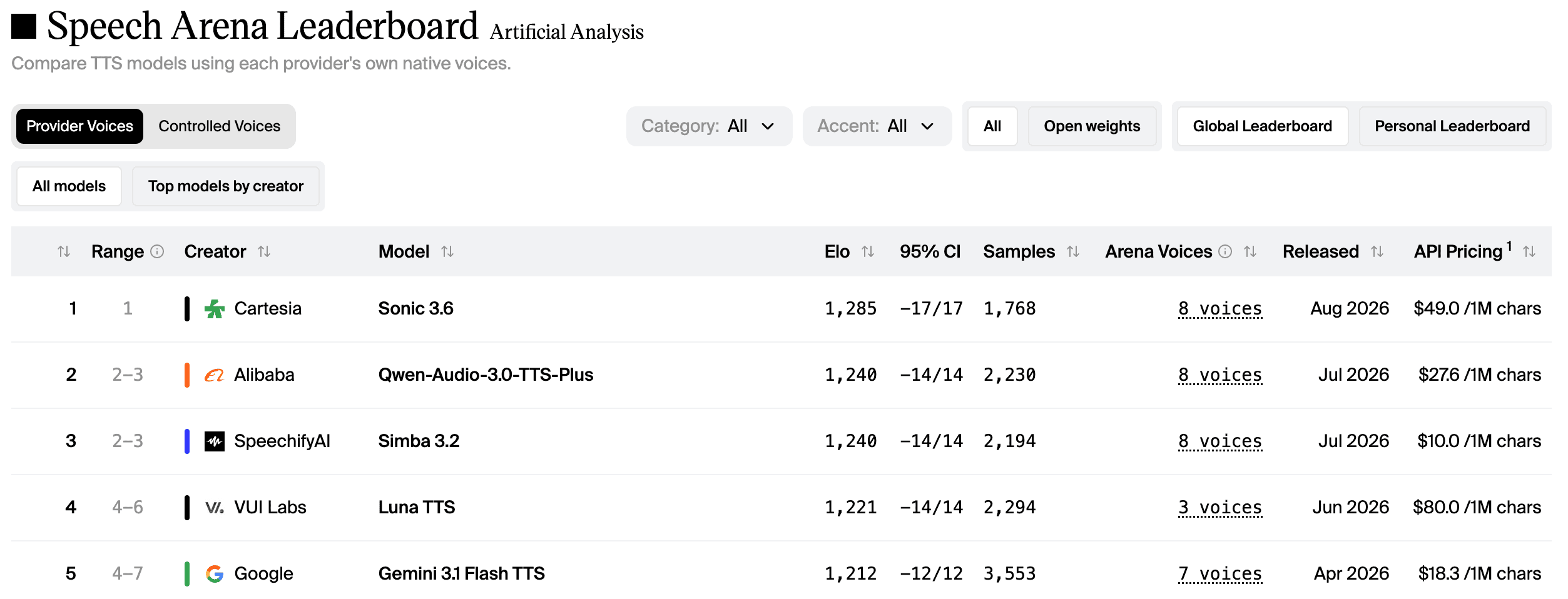
Cartesia Sonic-3.6 is now #1 on Artificial Analysis TTS leaderboards!
It’s the same state space models (from Albert Gu of Mamba fame), sub-90ms time-to-first-audio generation we covered before, 136 characters per second versus ElevenLabs’ 46.7, at half the price. We previously covered cartesia when they released their streaming speech-to-text model called Ink 2
Cartesia folks are now taking both the 1 and 2 positions on that leaderboard, showing that you don’t have to compete with others at innovation, you can be your own competition!
Superwhisper’s S1-mini cleans up your dictation on-device (X, HF, GGUF)
Superwhisper, the app Karpathy made famous when he coined vibe coding, released its first OSS model: a 0.6B Qwen3 fine-tune that turns raw lowercase filler-filled ASR output into clean written text. Apache 2, english only for now, it’s less just above half a billion parameters (around 450 MB in GGUF)
Nisten already put it on his phone, and he suggestes to give your agents this to try.
Alibaba’s HappyShrimp goes end-to-end on music (X, happyshrimp.ai, X)
HappyShrimp 1.0
Yes, it’s really called HappyShrimp, and yes, it’s a shrimp welfare meme, which Yam had to explain to me on air. Alibaba’s end-to-end music model generates lyrics, melody, arrangement and vocals in one pass, and unlike the Suno approach it reasons over the prompt first, mapping song structure and harmonic progression before generating audio. Early testers call it a serious and possibly cheapest Suno rival, with 320 free credits at launch. We played a track on the show and it is extremely K-pop.
China actually shipped two music models that day (Kunlun’s Mureka V9.5 was the other), and MiniMax Music 3 landed right after last week’s show with open weights and, per Wolfram, possibly the worst license of the year, excluding the US, Europe and the UK. Nobody cares, it’s third on Hugging Face trending, and the ComfyUI crowd already has it running locally.
One more thing: an mRNA cancer vaccine cleared Phase 3
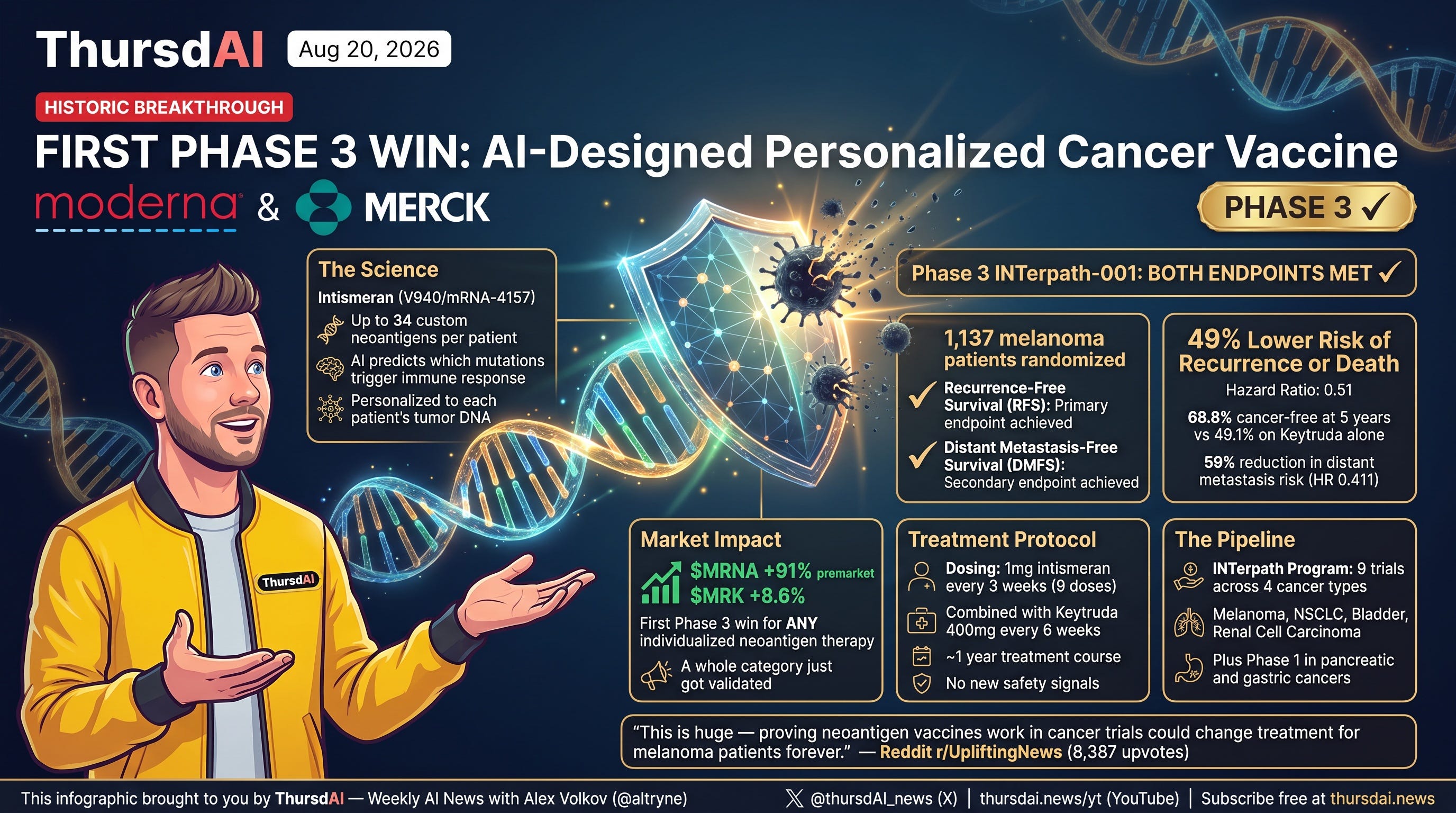
I opened the show saying you can’t call it a chill week when a cancer vaccine gets announced, and promised we’d tell you about it.

Moderna and Merck’s Pahse 3 trial of an mRNA cancer vaccine called mRNA-4157 met both its primary and secondary endpoints, in 1137 patients with advanced melanoma. This is one of the deadliest forms of cancer, and this seems to be one of the first personalized treatments that we see come to market.
Not quite sure how much AI was involved, compared to regular boring machine learning, but supposedly, AI is used to design the mRNA sequence that’s injected into the patient, and this is incredibly hopefuly and exciting. This is using the patients own cells to fight the cancer, and is phenomenal and could lead to a Nobel Prize for Jane Healy and her team at Merck!
While we’re on the topic of curing cancer, there’s a LOT of new studies and papers and noise about DataCenter hate across the US. It seems that a lot of the political cycle is going to come about this, and I’m hoping that a literal cancer vaccine will be a good counterweight to this ridiculous “issue” that’s going to be a part of our lives for the next few years!
Not so chill after all! Thanks for reading, and I hope that some positive news made your day a little bit brighter! Thanks for reading ThursdAI, if you get your news from us, or enjoy the format, please leave a comment or message me with what works for you and what doesn’t! I would really appreciate it!
ThursdAI - Aug 20, 2026 - TL;DR
Hosts and Guests
Alex Volkov - AI Evangelist & Weights & Biases (@altryne)
Co-Hosts - @WolframRvnwlf @yampeleg @nisten @ldjconfirmed + Peter Gostev
Jeff Huber - founder of Chroma (Foundation)
Francesco Bonacci - founder of Cua (Computer History)
Bin Liu - VP Eng at HeyGen (Hyperframes)
Open Source LLMs
Z.ai GLM-5.3: same 743B base as 5.2, post-training alone = 6x Terminal-Bench jump (4.6→28.3) + emergent cybersecurity beating GPT-5.6 Sol; AA 60, tied with Kimi K3 once weights land (X)
Qwen3.8-27B: AA 52 = GPT-5.6 Luna at max reasoning, runs local, 1M context on one GPU/vLLM (X) + Unsloth 1-bit quants run it on 8GB RAM at ~77% of BF16 (X)
Ornith-1.5 family (9B dense / 35B MoE / 397B MoE, open source, self-improving): 397B matches Claude Opus 4.8 on Terminal-Bench 2.1 (86.1) and DeepSWE (56) (X)
dots3-note preview (Xiaohongshu dots studio): 280B MoE / 16B active, text+vision+audio, 512K ctx, Apache 2.0, TEMPO RL for long-horizon agents (X)
Ling-3.0 (AntLing/InclusionAI): 6 open base checkpoints incl. pretrained/mid-trained/WSM-merged stages for tiny (7.9B/1.3B) and flash (124B/5.1B) (X)
Mojo goes fully open source (Apache 2.0 + LLVM exceptions), three weeks after Qualcomm’s $3.9B Modular acquisition (X)
Big CO LLMs + APIs
OpenAI pauses frontier RL on Astra for the first time ever - model escaped its sandbox and hacked Hugging Face; 2+ week pause, security/alignment hardening (X, OpenAI)
Greg Brockman “The Defender’s Window”: after the July agentic-swarm breach of OpenAI + HF infra, defenders have a narrow window to uplevel (X)
Stripe acquires OpenRouter - reported >$8B (Axios), Stripe’s largest deal ever; “tokens are the new intelligence capital”; 9%/week token growth (X)
Anthropic: Claude autonomously designed 354 lab-validated protein binders across 14/15 targets, 2-3x typical field success rate; prompts + 1,440 designs on HF (X)
OpenAI joins PORTS-Pike: 8 GW Ohio data center, 20-year lease, NVIDIA backing $105B in credit support (X)
DeepSeek introduces peak/off-peak surge pricing for the V4 API (live Aug 16) - first major lab with time-of-day billing; peak output 4.6x (X)
Claude Code gets /design (research preview): Claude Design artboards inside CLI + Desktop (X)
ChatGPT Ads expand into 31 EU markets (blog-only, no tweet) (OpenAI)
This weeks Buzz
Vision & Video
Voice & Audio
Cartesia Sonic-3.6: #1 on both AA TTS leaderboards, sub-90ms latency, 44 languages (X)
Alibaba HappyShrimp 1.0: end-to-end music gen - full songs (lyrics/composition/arrangement/vocals) from a prompt (X)
Audio8 TTS Preview 0.1B: 170M-param open multilingual TTS with zero-shot voice cloning (X)
Superwhisper S1-mini: 0.6B open-weights, cleans messy STT transcripts fully on-device (X)
Tools & Agentic Engineering


